
Introduction
The whole move, organised in one place
Completely free to use. No subscription, payment or hidden charge — and it always will be. The Smart Move Home Mover App is provided at no cost, with no paid tiers or upgrades, and is intended to remain free permanently.
Moving house is exciting, but it can also feel overwhelming. From the moment you decide to sell your property to the moment you finally sit down in your new living room, there are hundreds of small jobs, decisions, forms, phone calls, bookings and reminders to manage. Miss one important step, and it can cause delays, stress, extra costs, or confusion on moving day.
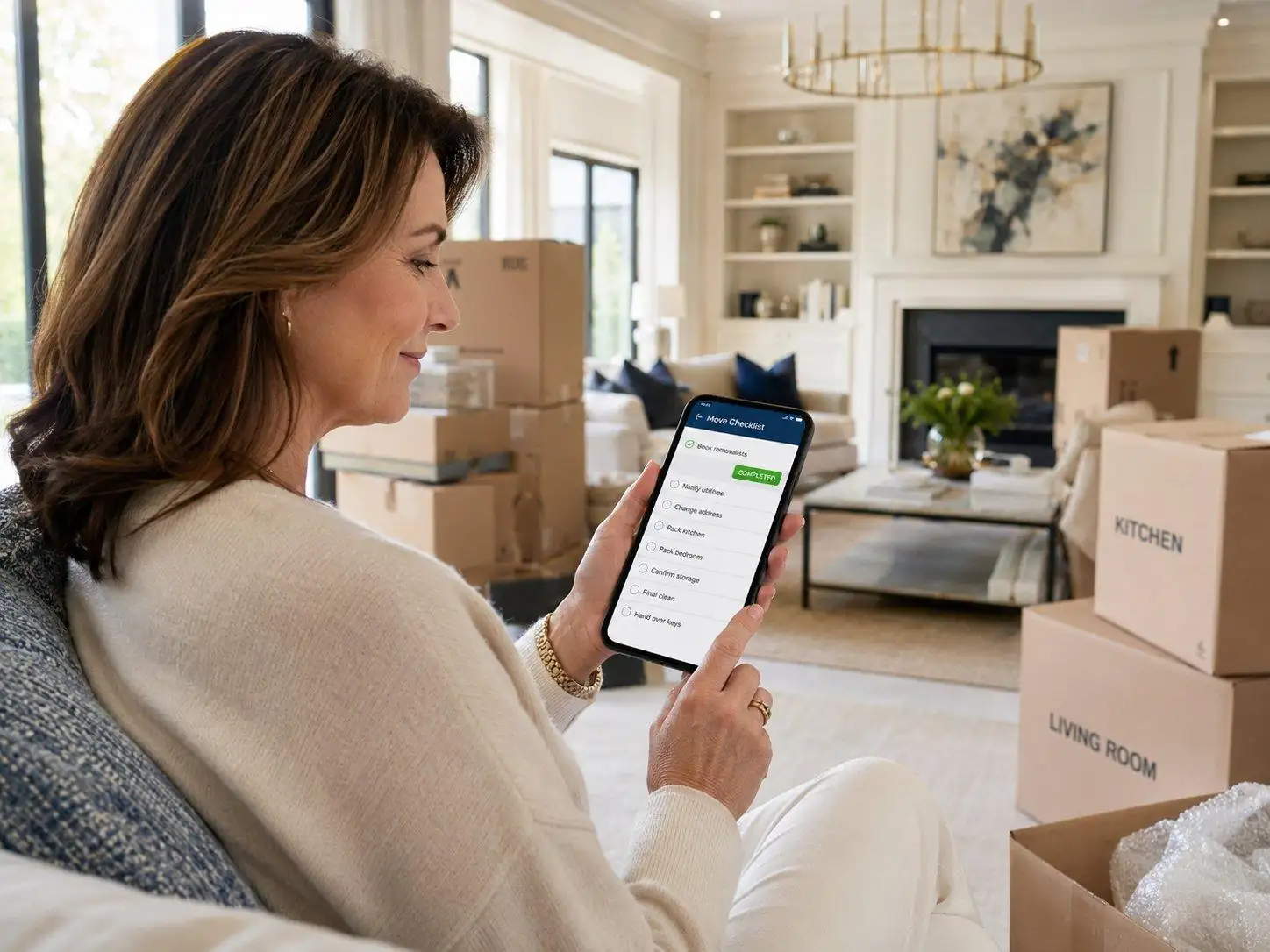
That is where the Smart Move App can make the entire journey easier. The app will guide you through the entire moving process in order, listing what you should do at each stage. As each task is completed, you simply tick it off. Anything unfinished stays visible, and the app can remind you of the things you still need to do before the next stage of your move.
Below is a brief overview of the entire house-moving journey, broken into 102 practical sections.
Stage 1
Decide to Sell
The journey begins with the decision to sell your home. This includes understanding why you want to move, where you want to go, what kind of property you need next, and whether the timing is right for your family, finances and future plans.
Stage 2
Work Out the Costs
Before your home goes on the market, it is important to understand the likely costs. Estate agent fees, solicitor fees, mortgage costs, surveys, removals, packing, storage, cleaning, stamp duty and emergency funds should all be considered early.
Stage 3
Prepare Your Home for Sale
A well-presented home can attract more interest and stronger offers. This stage includes decluttering, cleaning, small repairs, garden tidying, improving kerb appeal, gathering certificates, and making the property look as spacious and welcoming as possible.
Stage 4
Choose an Estate Agent
Choosing the right estate agent can make a major difference. You should compare valuations, fees, marketing quality, photography, local knowledge, viewing arrangements, contract terms and the agent’s ability to qualify serious buyers.
Stage 5
Put the Property on the Market
Once the estate agent is chosen, your property listing needs to be prepared and approved. This includes photographs, floor plans, property description, asking price, viewing arrangements, and ensuring your home is ready for potential buyers.
Stage 6
Start Looking for Your New Home
At the same time, you will begin searching for your next property. This stage includes setting up property alerts, registering with estate agents, viewing homes, checking areas, schools, transport, parking, broadband, local amenities and future resale potential.
Stage 7
Arrange Finance
A smooth purchase usually depends on having your finances ready. This includes speaking to a mortgage broker or lender, obtaining an Agreement in Principle, preparing documents, checking affordability, and ensuring your deposit is available.
Stage 8
Receive and Negotiate Offers
When offers come in, it is not always just about the highest price. A strong buyer with finance arranged, no chain, or a clear timescale may be more reliable. This stage helps you compare offers properly before accepting one.
Stage 9
Make an Offer on Your New Home
Once you find the right property, you need to make a serious and well-positioned offer. The seller will want to know your buying position, chain status, mortgage position and proposed timescale before deciding whether to accept.
Stage 10
Instruct Solicitors
Your solicitor or conveyancer handles the legal side of the move. This stage includes choosing a solicitor, completing identity checks, paying initial fees, providing forms, submitting documents and ensuring your sale and purchase files are opened correctly.
Stage 11
Mortgage Application and Survey
After your offer is accepted, the full mortgage application begins. The lender may arrange a valuation, and you may also choose a HomeBuyer report or a building survey to check the property's condition before proceeding.
Stage 12
Legal Checks and Conveyancing
This is one of the most important stages. Your solicitor checks contracts, title documents, searches, enquiries, boundaries, rights of way, leasehold matters, planning permissions, fixtures, fittings and anything else that could affect ownership.
Stage 13
Plan the Move Early
Even before the exchange, it is wise to start planning the practical move. This includes creating an inventory, identifying large or fragile items, checking access, measuring furniture, considering parking and deciding what needs special handling.
Stage 14
Get Removal Quotes
A proper removals quote should be based on a clear inventory and, where possible, a pre-move survey. The removal company needs to understand the property size, access, packing needs, fragile items, dismantling, storage and moving date requirements.
Stage 15
Start Decluttering Properly
The less you move, the easier and cheaper the move can be. This stage covers clearing lofts, garages, sheds, wardrobes, cupboards and paperwork, then deciding what to keep, sell, donate, recycle or dispose of responsibly.
Stage 16
Prepare for Exchange of Contracts
Exchange of contracts is the point where the move becomes legally binding. Before exchange, your solicitor will confirm enquiries are complete, contracts are signed, deposit funds are ready, and the completion date is agreed across the chain.
Stage 17
After Exchange: Lock in the Move
Once the exchange has happened, you can confidently confirm your moving arrangements. This includes booking the removal company, arranging packing dates, sorting parking permits, notifying building management and confirming childcare or pet care if needed.
Stage 18
Order Packing Materials
Good packing starts with the right materials. Boxes, tape, labels, packing paper, wardrobe boxes, mattress covers, sofa covers, and specialist cartons for mirrors, pictures or televisions can all help protect your belongings.
Stage 19
Notify Important Organisations
Changing address involves far more than telling friends and family. Banks, insurers, DVLA, HMRC, employers, schools, doctors, dentists, subscriptions, online shopping accounts, council tax, utilities and Royal Mail redirection all need attention.
Stage 20
Prepare Utilities and Services for the New Home
Your new home needs to be ready for daily life. This includes setting up energy, water, broadband, council tax, TV licence, insurance, bin collections, parking permits, smart meters and any essential services before or shortly after moving in.
Stage 21
Pack Non-Essentials First
Packing should begin with items you do not use every day. Seasonal clothes, books, spare bedding, ornaments, decorations, loft items, garage items and rarely used kitchenware can all be packed well before moving week.
Stage 22
Pack Carefully and Logically
Good packing prevents damage and saves time later. Heavy items should go in small boxes, fragile items should be wrapped properly, cables should be labelled, screws should be bagged, and essential documents should stay with you.
Stage 23
Create Essential Boxes
Your essentials box is the box you will be grateful for on moving day. It should include tea, coffee, kettle, mugs, snacks, chargers, toilet roll, soap, towels, medication, cleaning products, basic tools and first-night items.
Stage 24
Final Week Before Moving
The final week is when loose ends must be tied up. Confirm removals, finish most of the packing, defrost the freezer, cancel local deliveries, prepare appliance manuals, arrange final cleaning, and keep important documents accessible.
Stage 25
Day Before Moving
The day before moving is about being fully ready. Final boxes should be packed, phones charged, appliances prepared, suitcases packed, keys organised, parking arrangements confirmed, and valuables kept safely with you.
Stage 26
Moving Out Day
On moving-out day, the removal crew arrives, and the loading begins. You need to guide the team, identify fragile items, check cupboards, take final meter readings, photograph the property's condition, remove rubbish, and hand over the keys.
Stage 27
Completion and Key Collection
Completion is when the money transfers and ownership changes. Once confirmed by the solicitor, you collect the keys, enter the new property, check that it is vacant, inspect its condition, and take the opening meter readings.
Stage 28
Moving Into the New Home
When the vans arrive, clear instructions save time. Boxes and furniture should go into the right rooms, beds should be reassembled, essential boxes should be easy to find, and walkways should be kept safe.
Stage 29
First Things to Set Up
The first priority is making the home usable. Beds, bathroom basics, kettle, chargers, fridge, heating, hot water, Wi-Fi, smoke alarms, stopcock, fuse board and boiler controls should all be checked early.
Stage 30
Security and Safety
A new home should feel secure. This stage includes checking locks, windows, alarms, cameras, garage codes, outdoor lighting, smoke alarms, carbon monoxide detectors, trip hazards and safe storage of tools or cleaning products.
Stage 31
Unpack in the Right Order
Unpacking is easier when done logically. Start with essentials, bedding, bathrooms, kitchen basics, clothes, work items, children’s items, pet supplies and important documents before moving on to less urgent boxes.
Stage 32
Admin After Moving In
Even after the move, the admin continues. You may need to submit final and opening meter readings, confirm utility accounts, update banks, insurance, DVLA, employers, schools, medical records, subscriptions and the electoral register.
Stage 33
Make the House Livable
This is where the new house starts to feel like home. Kitchen cupboards, wardrobes, bathrooms, paperwork, tools, curtains, lamps, pictures, rugs and furniture all begin to find their proper place.
Stage 34
Final Checks
Before calling the move complete, check that everything has arrived safely. Look for missing boxes, damage, appliance issues, heating problems, plumbing faults, bin days, local services and anything that needs reporting quickly.
Stage 35
Close Down the Move
The final stage is the best one. Empty boxes are cleared, the main rooms are tidy, cupboards are closed, the sofa is in place, the lights are on, the wine is poured, and you finally sit down, put your feet up and enjoy your new home.
Final thoughts
Let the Smart Move App Do the Remembering
The Smart Move App is designed to make sure nothing gets forgotten. Instead of trying to remember everything yourself, the app can guide you through each stage, remind you of what still needs to be done, and help turn a stressful move into a calm, organised and successful one.
Smart Move Removals provides professional house removals, packing services, careful loading, secure transport and organised unloading — backed by an app built around the way real moves actually unfold.